
From robotic arms to intelligent vehicles: Welding King Machinery leads the welding automation revolution
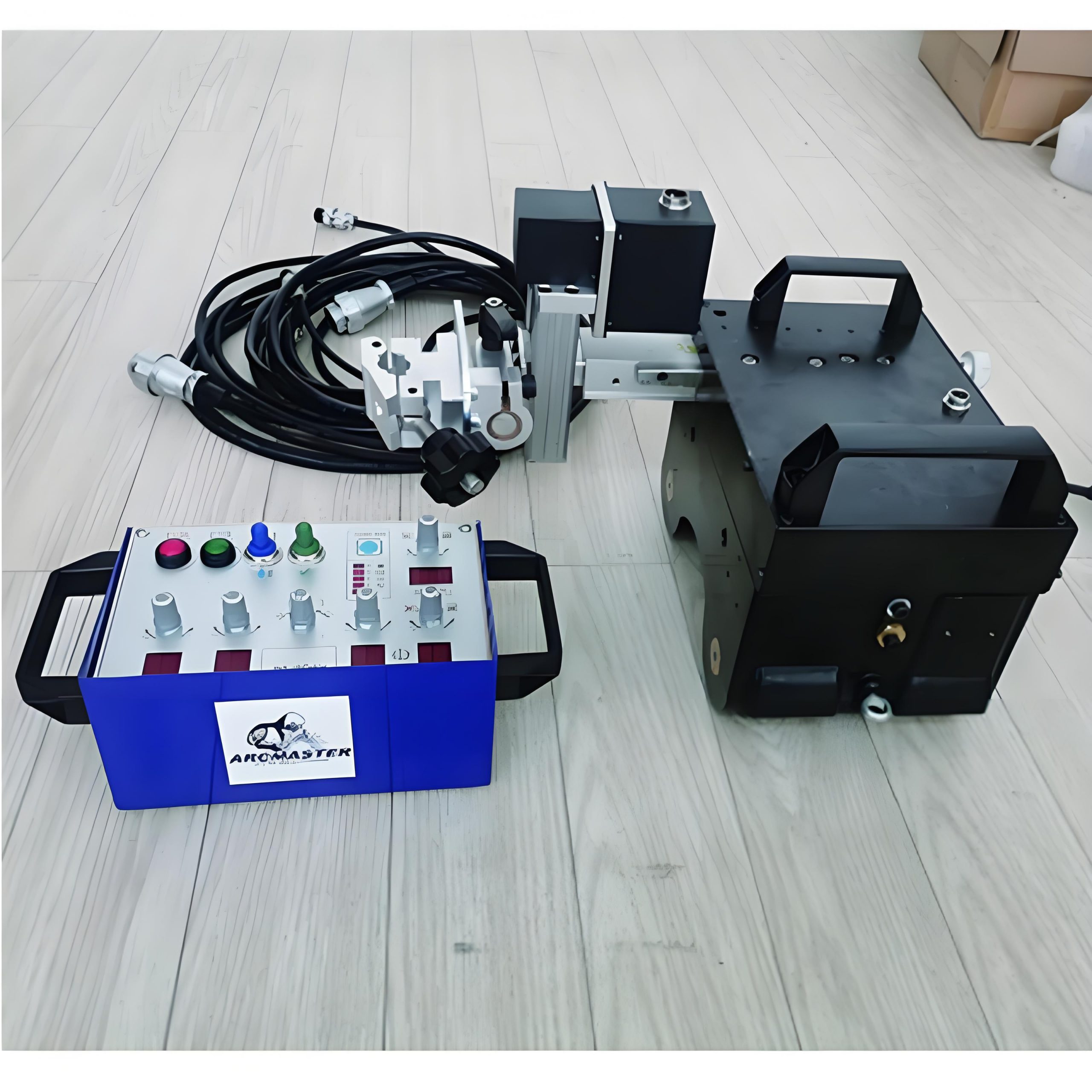
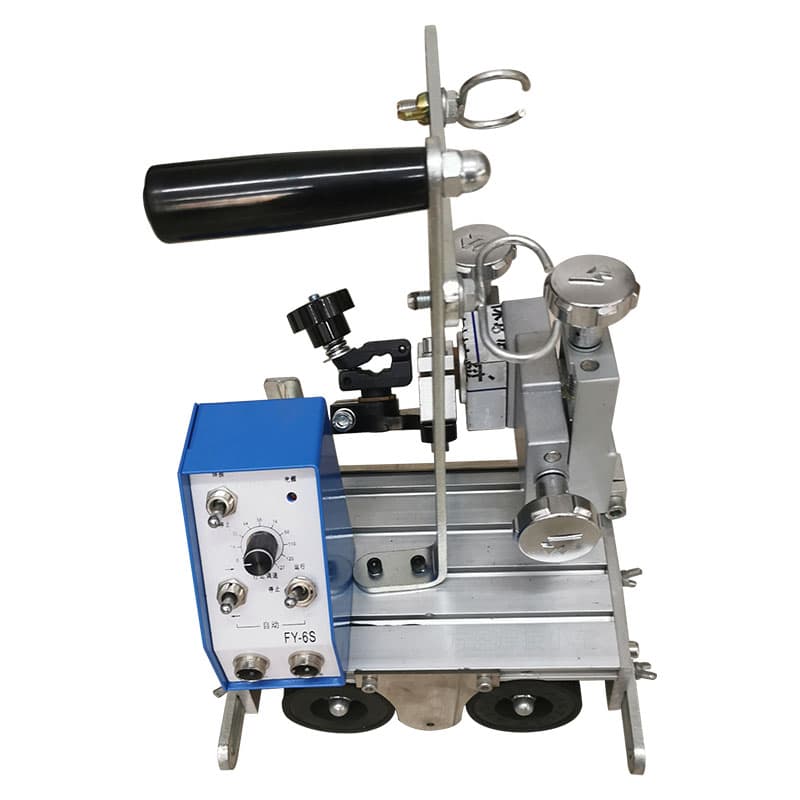
In the 1960s, the world’s first industrial robot, Unimate, was born in the General Motors factory in the United States. The bulky robotic arm completed fixed-point welding through preset programs – this is considered the starting point of welding automation. What truly freed welding equipment from the constraints of fixed workstations was the emergence of rail mounted crawling carts in the early 21st century. As one of the first domestic entrants, Welding King Machinery launched the first generation magnetic welding car PW-1 in 2008, which achieved circumferential welding through dual gear meshing tracks, increasing welding efficiency to 1.8 times that of manual labor.
Technological Evolution
Mechanical structural innovation:
Early small cars faced the problem of poor adaptability to pipe diameters. Welding King Machinery draws inspiration from narrow gap welding technology and innovatively adopts a “double bottom plate hinge design”. By adjusting the angle of the bottom plate through a toothed clutch, the same equipment can adapt to pipe diameters ranging from 150mm to 2000mm, solving the problem of track fitting for thick walled steel pipe welding.
Drive system upgrade:
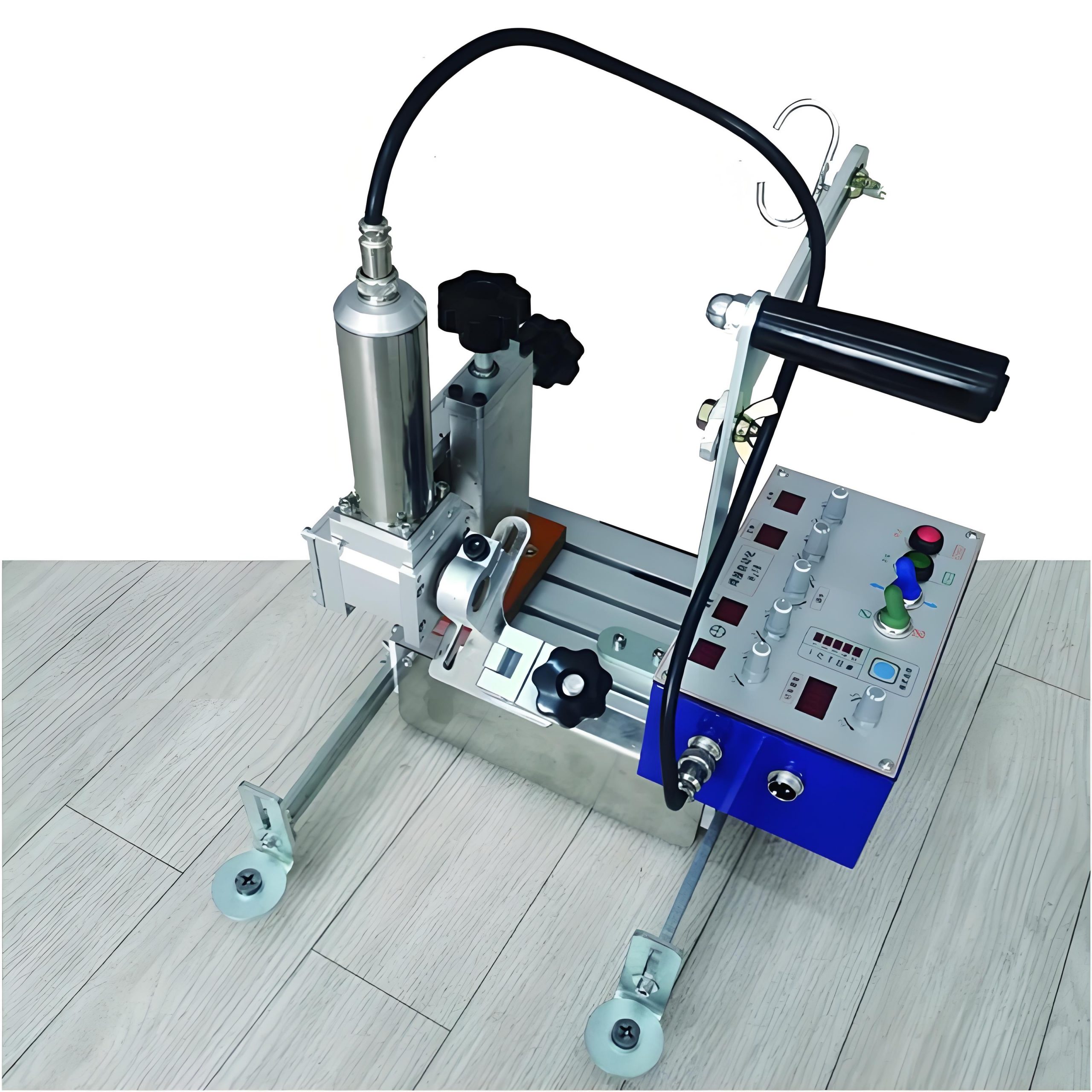
From the first generation of DC motors to the current combination of stepper motors and worm gear drives, the walking accuracy has reached ± 0.05mm. Coupled with a disc spring damping structure, the welding gun can maintain zero shaking even on a 30 meter long weld seam.
Leapfrog improvement in efficiency
According to the actual measurement data from Zhenhua Heavy Industry Nantong Company, it takes 220 minutes for manual welding of a 30 meter long steel beam with a welding foot of 6mm, while the Welding King FY-QB-09 trolley only takes 97 minutes, resulting in an efficiency improvement of 126%. At present, the equipment has been widely used in ship corner welding, pipeline flange connection and other scenarios, with a stable weld qualification rate of over 98.5%.
Expert opinion:
“The essence of welding carts is to adapt the equipment to the workpiece, not vice versa, “said Chen Lifeng, Chief Engineer of Welding King Machinery.”Our technological roadmap always focuses on two points: first, the tolerance of mechanical structures to complex working conditions, such as adjustable wheelset design; The second is to lower the threshold for the use of intelligent technology, such as the drag and drop teaching function, which shortens the training cycle for workers from 3 weeks to 3 days.”
With the advancement of Industry 4.0, Welding King Machinery is integrating deep learning algorithms into the new generation of models. It is reported that the adaptive welding system in its experiment can identify welds with assembly errors up to 5mm and automatically compensate for deviations through three-dimensional path planning. This technology is expected to be put into commercial use in 2026.